Running Your Own Penny Press for Fun and Absolutely Zero Profit
Here’s the story of how I ran a ambulatory penny press.
You know those souvenir penny press machines you find at tourist traps? We made one. But instead of a single overrated attraction, our machine moves around our city, highlighting local favorite businesses. It’s called Local Crush.
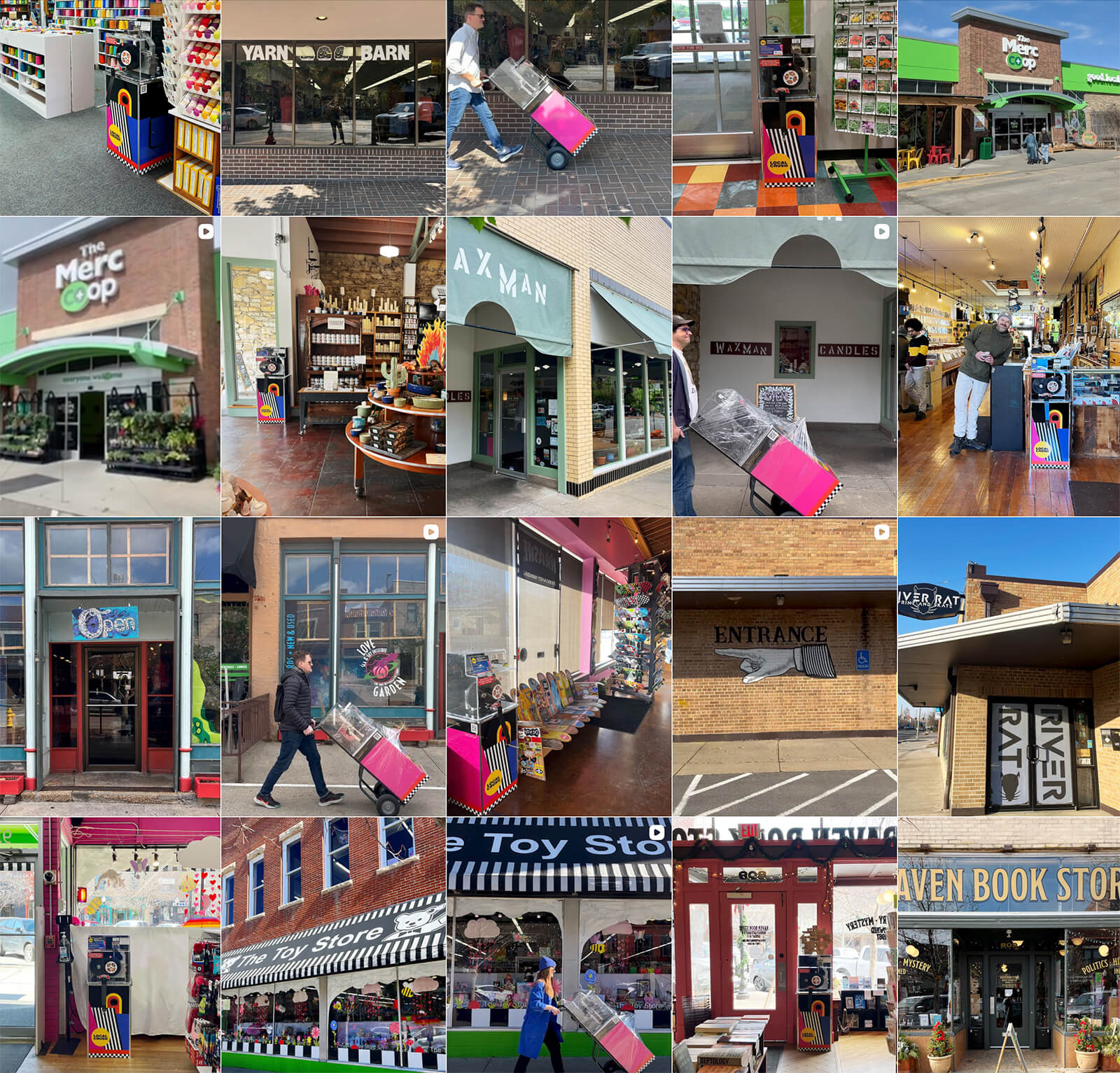
We ran Local Crush for a full year-long circuit, with the penny machine hosted at twelve local favorites. Each month the host business chose a local charity, and all the quarters spent go directly to that nonprofit.
It’s a limited-time opportunity for penny collectors - visit each location once per year, and collect all the designs.
This post will be a recap that covers:
- what we did
- why we did it
- how it went
- and should you do this in your city?
First, here’s what it looks like, in one of our host stores:

We documented the journey mostly on instagram! But this is my restrospective report.
Why we did it
Our family has always liked collecting pressed pennies. We’re not super hardcore about it, but if a place we’re visiting has a machine, we’ll definitely get one. A pressed penny is kind of the ideal souvenir: they’re super cheap, they can only be attained by visiting the location, and they don’t fill up your suitcase (or your home) with junk. You can keep a lifetime’s collection in a spare jar.
 You know, like this.
We’ve always imagined owning one of these machines. But I don’t run a tourist destination! And then the more we thought about it, we wondered - why should the tourist traps have all the fun? Wouldn’t it be great if the darling small businesses we love had this too?
So that’s what we did.
What we did
Well, we ordered one. There are a few companies around the country that still make these machines, and while it was a little more complicated than just picking something up on amazon, it’s not that much more complicated.
First, however, we started talking to the proprietors of our favorite local businesses. It’s kind of a weird pitch: would you let us station a penny press machine in your business? And use your logo to make a pressed penny souvenir for your business? And donate all the money to a charity? But it’s only there for a month? Certainly it took some explanation here and there.
But in general: yes! I don’t think we had anybody turn us down, once we got the idea across.
After we found the right vendor, we worked with them to set up the first two die wheels. Our penny press can hold 4 custom designs, and so we used three spaces slot for a local business, and then one for the Local Crush brand itself. I did a lot of variations.

With that plan, we need four separate die wheels, and we need to change them out once per quarter. The die wheels look like this:

Once we had the first two wheels, we put our order in with the machine manufacturer, and they built out the cabinet itself and the die wheels. We drove out to Colorado and loaded it up into our car to drive home!
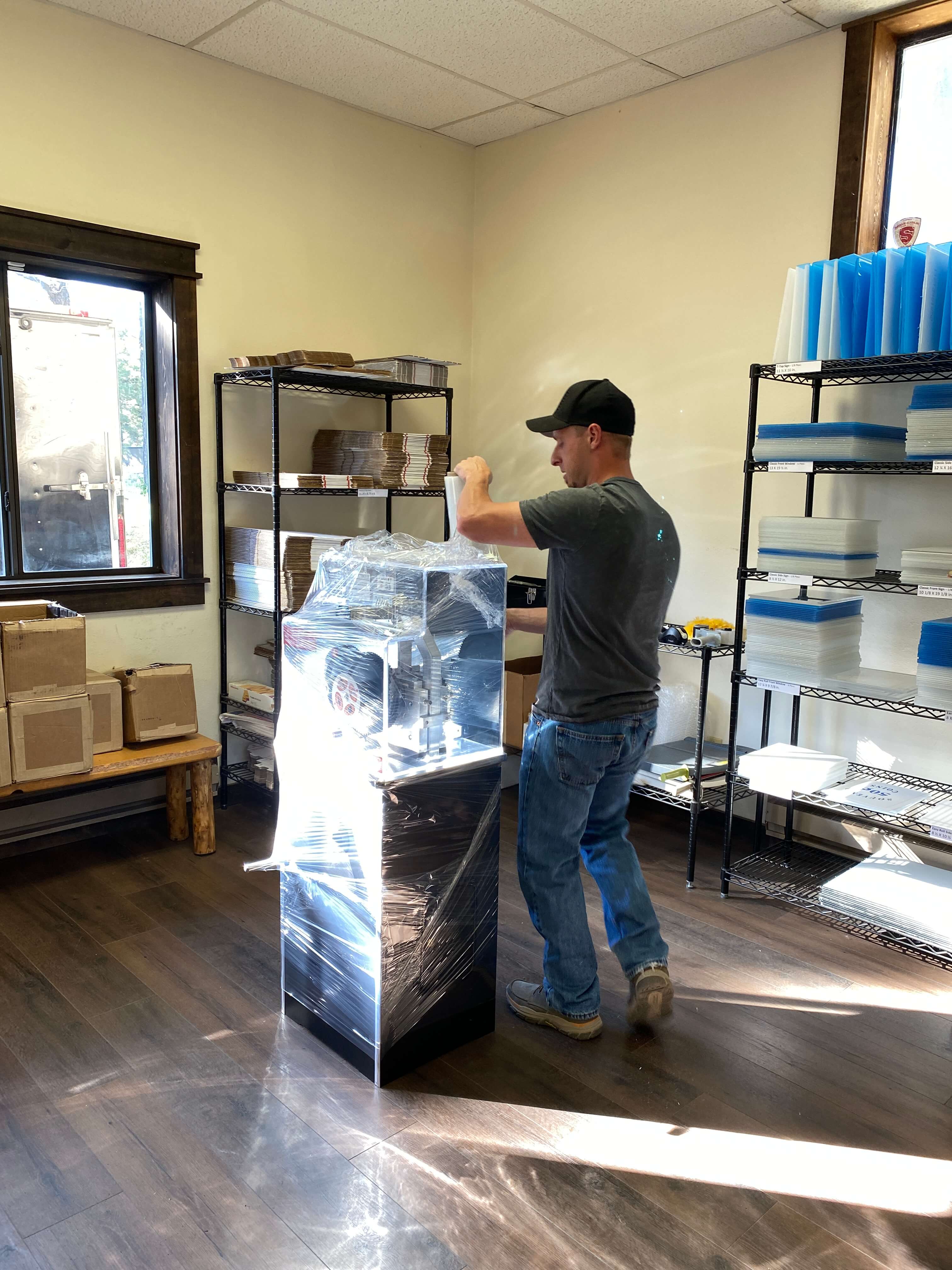
The machine itself is kind of ugly, so we designed a vinyl wrap for it, and Erika constructed a big eye-catching topper sign.

How it went
It went great, I think?
We definitely achieved the first goal: make the press, move it around the city, and draw some attention to local favorite shops and charities.
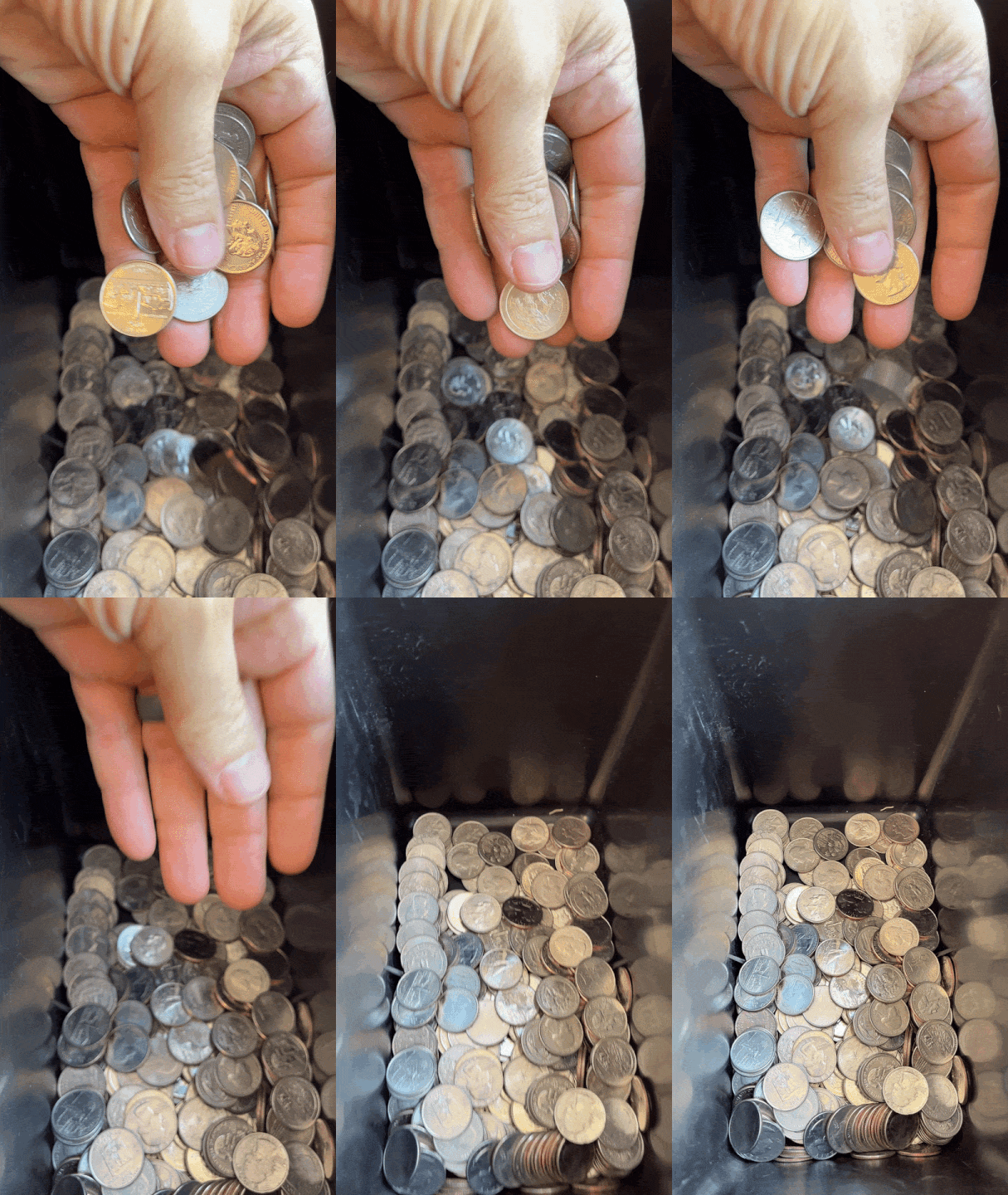
- Total locations: 12
- Total nonprofits: 10 (some stores chose the same charity)
- Total raised for local charities: $1380.00
- Total pennies crushed: 2,760
Could anybody make a profit at this? Not the way we’re doing it, that’s for sure. Did we spend more on the press than we generated in quarters? Definitely. Plus, of course, we gave away all the quarters. Even if we were keeping the proceeds this would have lost money. But that wasn’t the goal, of course - we wanted to create something new for our city.
I often thought about how this would compare with a ‘normal’ penny press, where we are in a tourist trap location and relying on throughput of lots and lots of foot traffic. This is a different model, of course, relying instead on repeat visitors. I suppose even if we repeated this process, we could eventually break even and recoup the cost of the press itself.
What’s next
The actual day-to-day of running the press was… kind of a hassle? Not a big hassle. But we moved the press every month, and that means every month we had to coordinate with store staff to let them know when we’d make the transition (and remind them that they agreed to this a year ago and make space for it). Then we’d have to go pick up the press, and get it established in the new location. No a big deal, just a minor schlep.
But! We got to know the owners of twelve local favorite businesses, and in some very small way give back to our community. That was the best part. We had several other businesses reach out to join the next cycle, which I think is a vote for its future.
A building I love
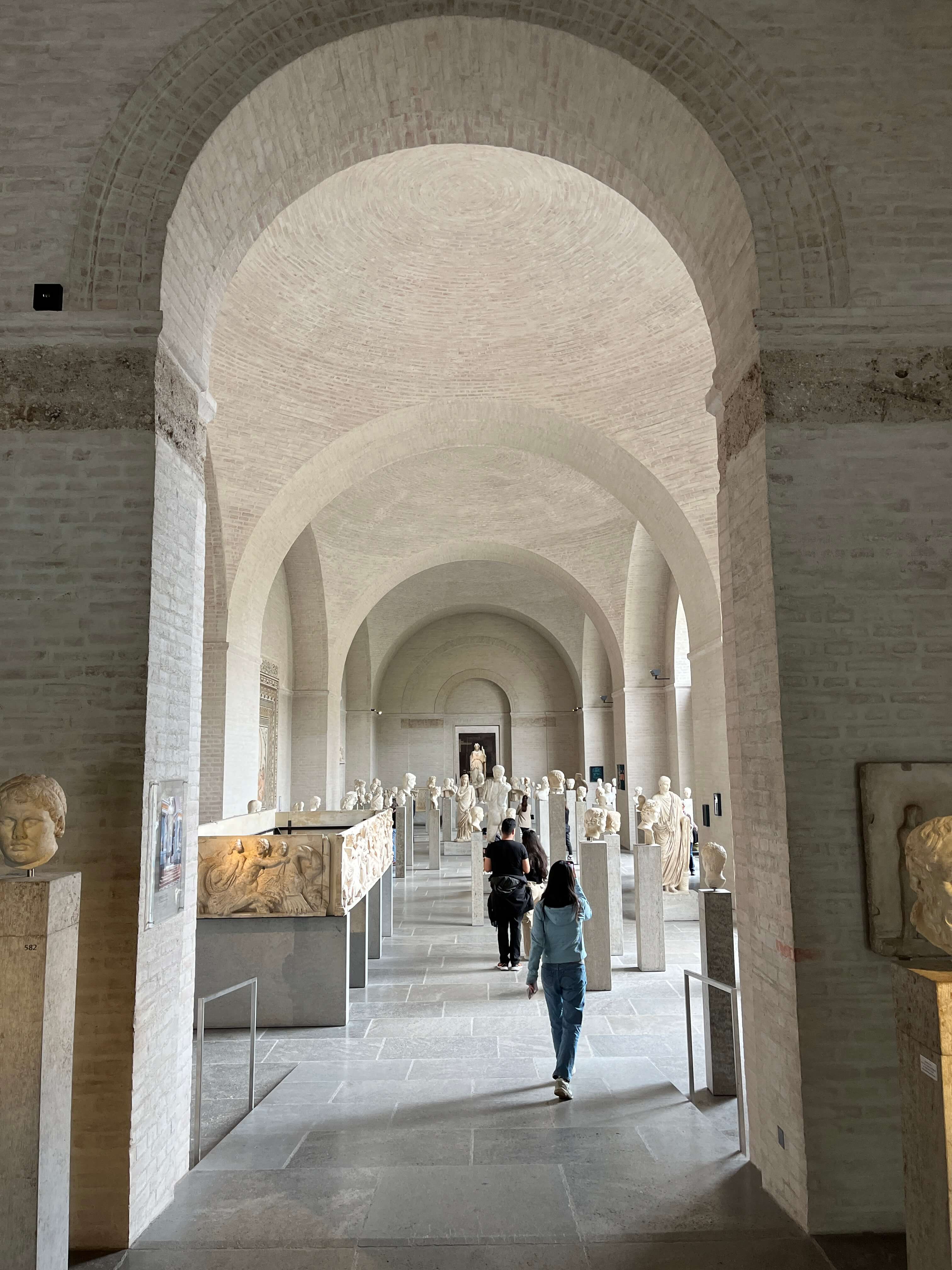
My Roman Empire is the interior spaces of the Glyptothek museum in Munich. I visited in the summer of 2024 and haven’t stopped thinking about it since. This post is to document some observations and get them out where I can reference them.
I’m always on the lookout for architecture inspiration; I’ve got an ongoing project file to design the Studio Kirkland ‘weirding haus.’ This is our codename for a new home, a small empty-nest-compatible house that’s planned for resilience in a changing climate, with a focus on maintainability. Aesthetically, I’ve always wanted a home to be a cold concrete box. Anyways, all my ideas were shaken up by this building.
It’s so beautiful. From the outside, the museum is a a kind of bland classical temple. Could be anywhere. But I love classical sculpture, so a large collection of sculptures from antiquity is Matt Catnip.
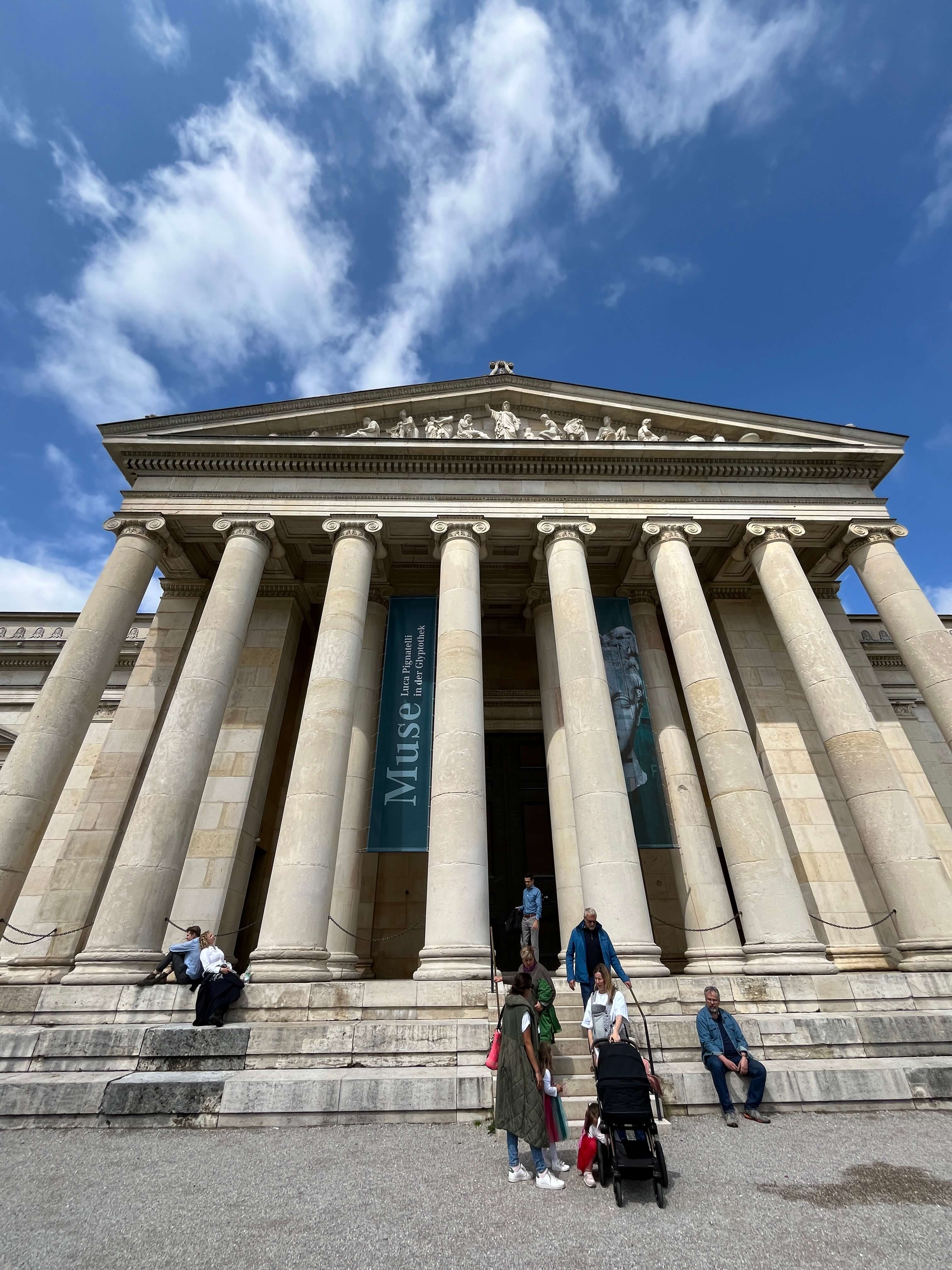
Nice enough, obviously, but inside is what blew my dome. The walls and ceilings are all this lightly plastered brick; apparently it was originally built with frescoes but they didn’t survive WWII, and this is how they’ve restored it. It’s a series of domes and barrel vaults, with some interesting brickwork that saves it from a kind of de Chirico uncanny valley.

The museum is a square, where you enter from the front portico and then can move around the square circuit in either direction. There’s a large courtyard in the middle.

(Shoutout to original architect Leo von Klenze and funder Bavarian King Ludwig)

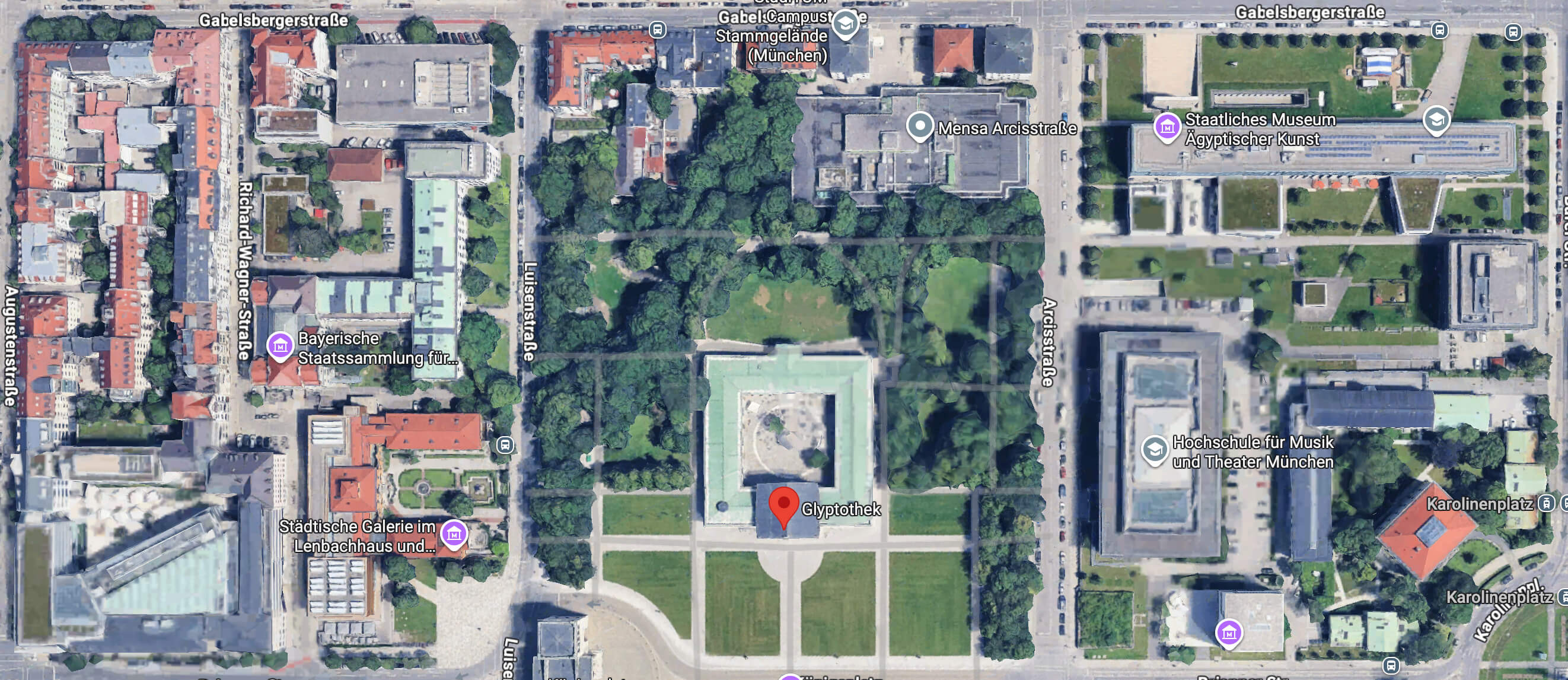
You can see the park-like setting is quite nice too.
Because it’s all arranged around a courtyard, it has huge interior windows, which floods the galleries with natural lighting. I don’t think there even are any windows that face out, at all?
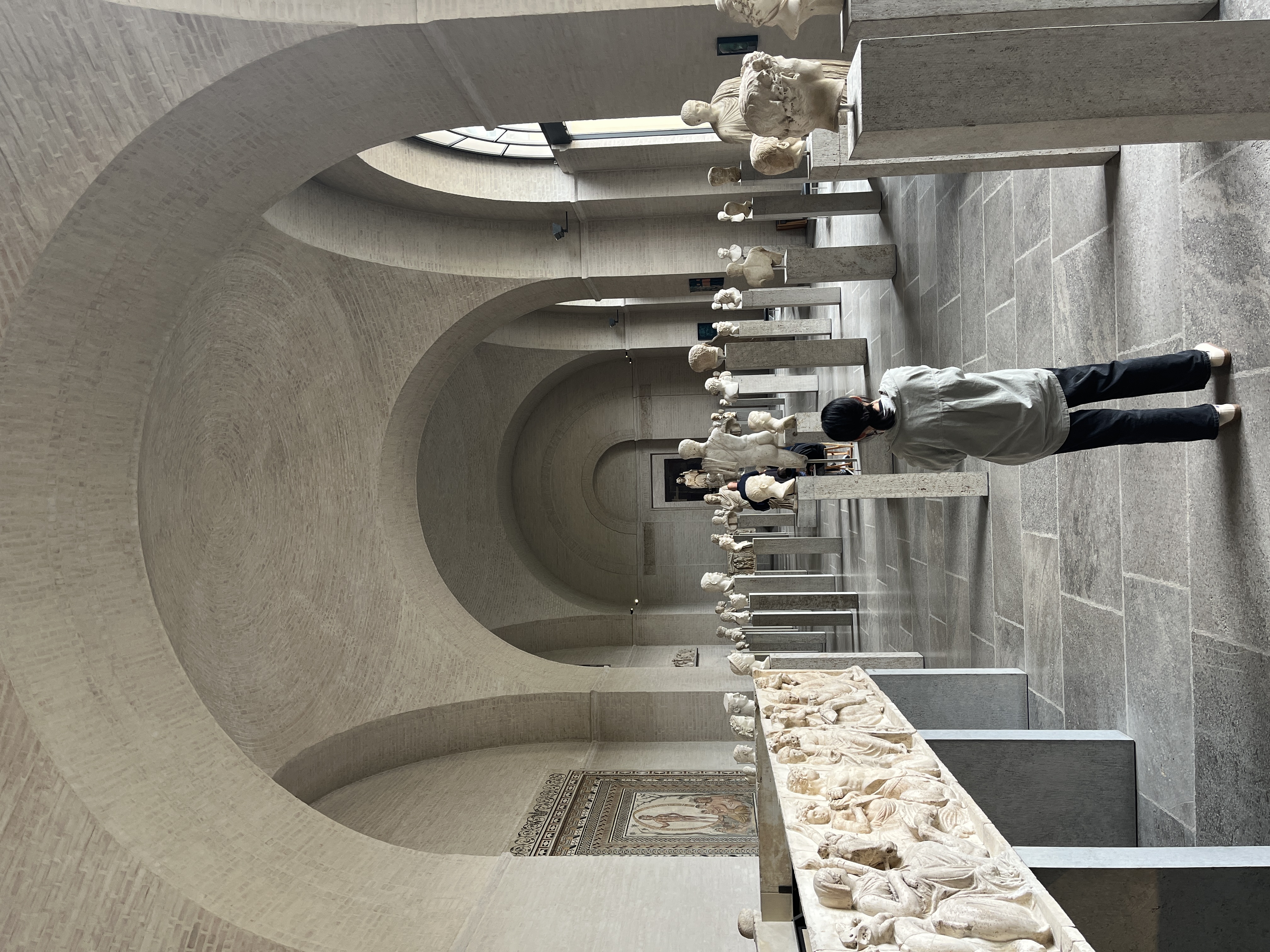
I was never there after dark so I don’t know how these rooms feel with any kind of artificial lighting. Maybe there are LED strips hidden in that break between the vertical wall and the bottom of the barrel vaults.
The front two corners have round rooms with interior domes and skylights above; these are gorgeous feature rooms that highlight showstopper sculptures.
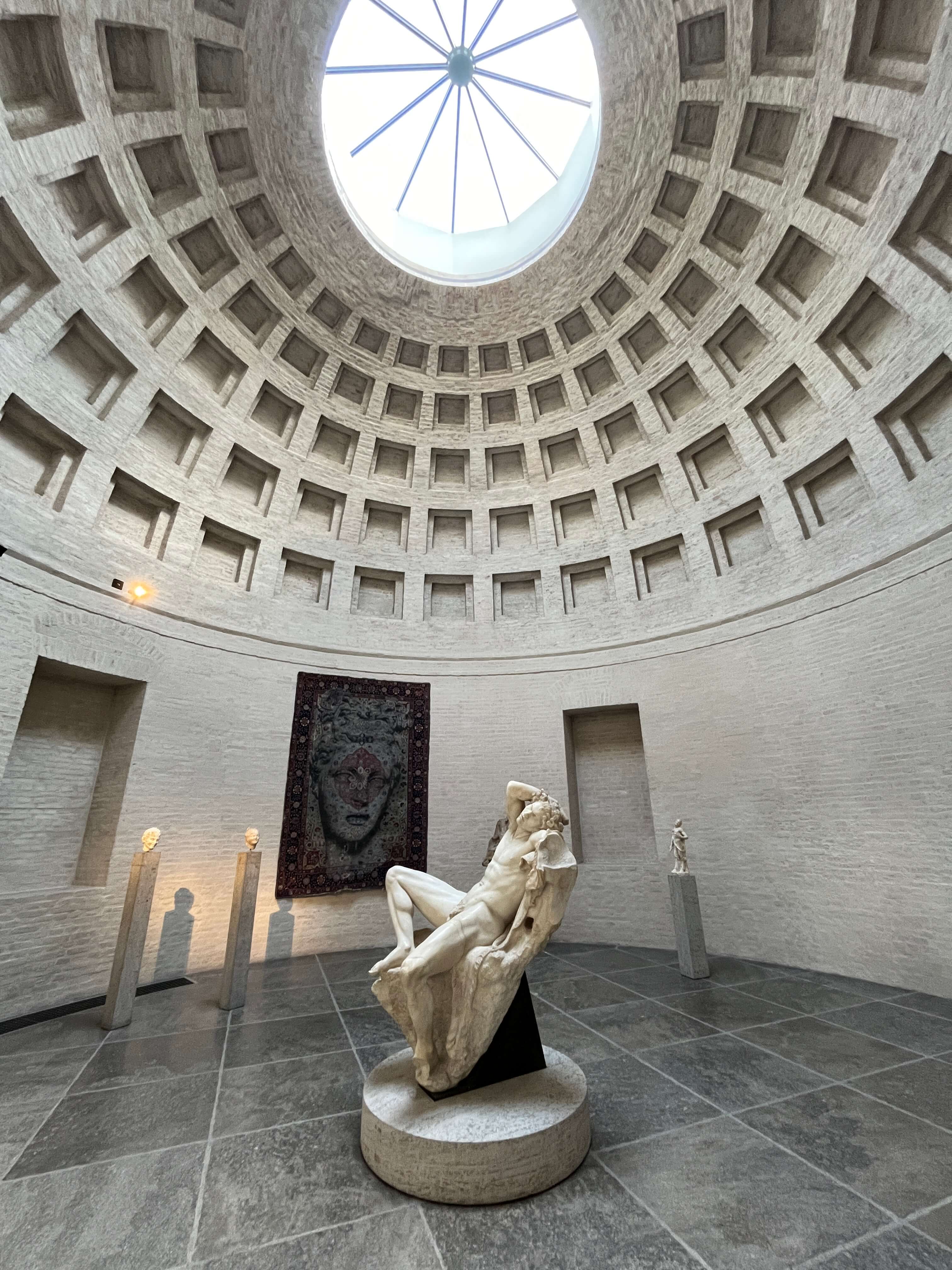
Of course, it’s a museum and it’s full of incredible work; that lends some aura.
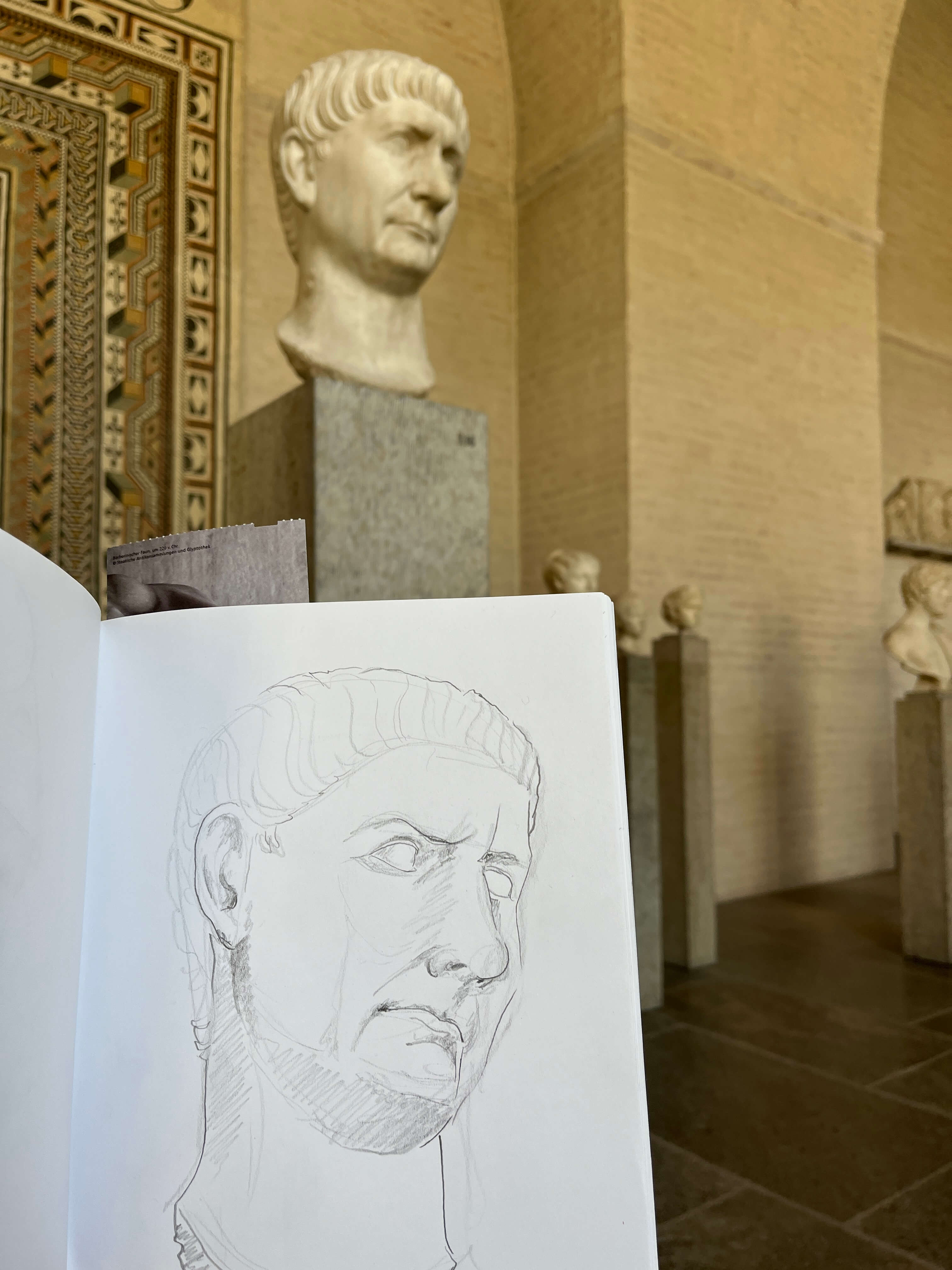
And now I have spent a lot of time in my sketchbook trying to scale this building down to something that would work as a house. Daydreaming about where we’d put a kitchen, and library, and guest rooms. It defeats many of the principles I’ve been designing from (minimal roof space, centralized mech services, easily replaceable/composable parts). But damn if it didn’t feel great to actually BE in. I spent a lot of time here, going back to enjoy the spaces themselves, but also to just hang out and draw.
In Jane's House
Of the many alternative fiction methods I’ve outlined in my Calls for Entries series ( Part One, Part Two, Part Three), one of the more recent is ‘tell a whole story with a series of yard signs.’
Well: I’ve often ruminated on the dumb joke that takes this format, and finally decided to make it real. Sort of.

So: I made a little website studiokirkland.com/inthishouse - and now you can read ALL of Pride and Prejudice as a yard sign. And also buy one if you want to get a sensible chuckle out of your literate neighbors, I guess!
My Favorite Bands' Favorite Bands
Here’s the story of a little website I built for myself, but thought I would share with others… and then realized I definitely only built it for myself.
I love live music. I am pretty choosy about what kind of recorded music I listen to, but I will happily listen to the worst band if I can be in the same room with them, and feel the bass vibrate with my actual body. I love a live show.
And while they’re always kind of a crapshoot, I do really like to hear the opening acts. I show up to concerts on time!
The very first concert ticket I bought myself was for the REM Monster tour, in 1995. The opener for that show as a little British band I’d never heard of called Radiohead.
SO: I’m interested! If you like a band, what kind of bands open for that band?
I designed (and vibecoded) a little app:

This would be a perfect little app: connect your Spotify* account, get a listening history. Find the bands you listen to the most. Analyze their touring schedule. Build a playlist of which bands open for them.
And it worked!


It’s not perfect (sometimes it finds people that play the same festival, or even just the same venue on the same date, and confuses things). But it’s already surfaced some new-to-me music.
I was all excited to share this, and then found out: Spotify doesn’t actually allow this. Their API has two modes: build for yourself, or become a big partner. My Big Partner application was rejected (you have to have millions of users and serious revenue before they consider you).
So it only works… for my Spotify account.
Breathwork for Church
OK, ‘breathwork’ is this thing about controlled breathing, right?
Taking deeper / longer / more measured breaths in specific ways is supposed to have all these real, actual health benefits: physical and mental and emotional. Like, it can supposedly calm you, improve your sleep, improve focus, juice your attention span, etc., all depending on how you’re breathing. Maybe it’s a bit woo-woo, sure. But on the other hand: we all understand that taking a deep breath is calming. It seems plausible.
I know the few times I tried an ‘activating’ breathwork thing, it felt AMAZING. As good as a strong cup of coffee.
SO what I’ve always wondered, and think about once per week: does anybody write songs that build in breathwork? Singing is by its nature a kind of structured breathing, but in a loose way. When you sing, you generally decide when to take new breaths in, but the song itself determines when you breathe out. And it seems like with a little more planning, you could map this into a real breathwork exercise. Instead of just ‘in’ and ‘out’ and ‘hold’ in breathwork, we could have words and melody.
And furthermore: I go to church on Sundays, and every week we sing songs together that are meant (in part) to affect our mental and emotional state. That’s not the POINT of worship music per se, but it’s part of it, right? We sing Amazing Grace to remind ourselves that we once were lost but now are found. We sing It Is Well With My Soul to practice equanimity both when peace like a river attendeth my way AND when sorrows like sea billows roll.
SO my question is: who is writing new-age-breathworky songs for Christian worship, and where can I try them out?